How AI Tools Interpret Prompts: A Structural Explanation
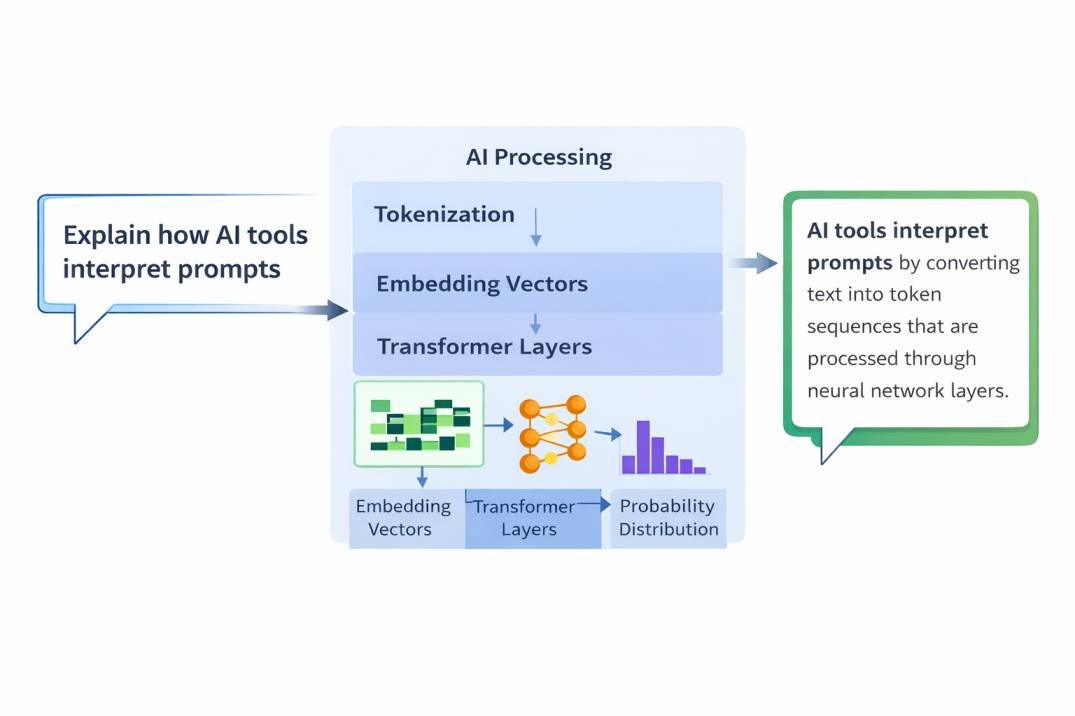
Diagram showing how AI tools interpret prompts through tokenization, embedding vectors, transformer layers, and probability distribution.

Introduction How AI tools interpret prompts is determined by a sequence of computational processes used by modern language models to analyze input text. AI tools that generate text or perform automated analysis operate by processing user prompts through models trained on large datasets. When a prompt is submitted to an … Read more

Why AI Tools Give Different Answers to the Same Question: Understanding Probabilistic AI Generation

AI system generating different answers to the same question illustrating probabilistic AI output

Introduction Why AI tools give different answers to the same question is a behavior frequently observed in modern artificial intelligence systems. When identical prompts are submitted multiple times, the generated responses may vary even though the input remains unchanged. This variation occurs because many AI generation systems operate using probabilistic … Read more

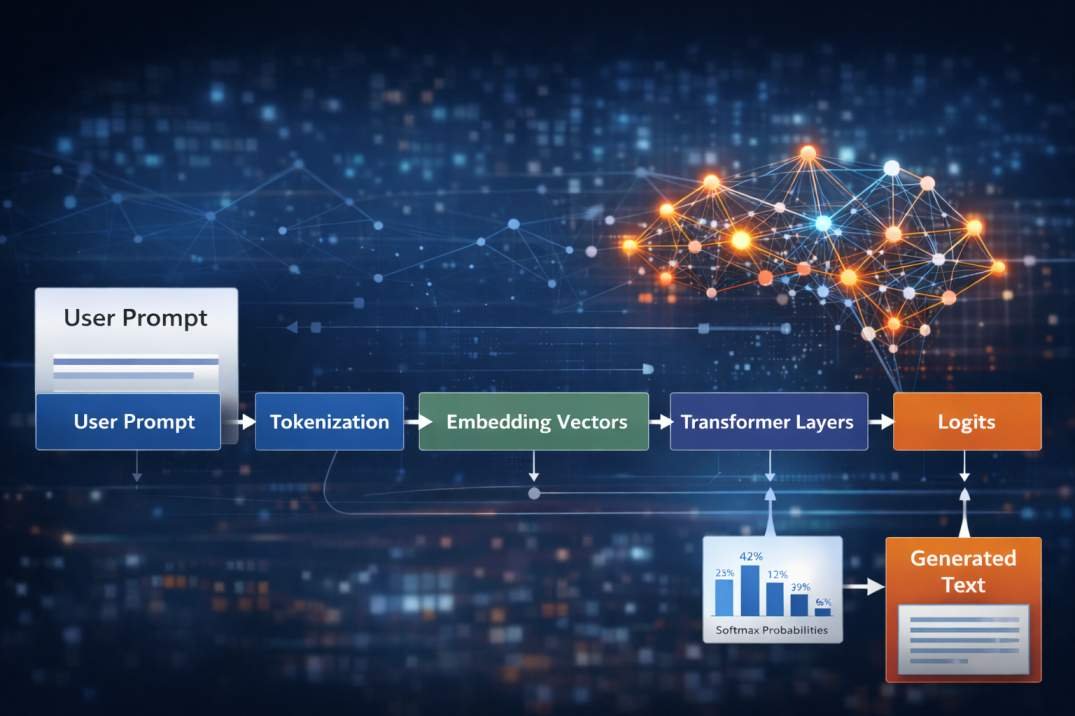
What Happens Inside an AI Tool After You Click “Generate”?

Diagram showing the internal pipeline of AI text generation including tokenization, embedding vectors, transformer layers, logits, softmax probabilities, and generated text.

Introduction The AI text generation process begins when a user selects the “Generate” button in an AI tool interface, the request initiates a structured computational workflow inside the system. The interface action itself does not directly produce text output. Instead, it triggers a sequence of internal operations that process the … Read more

How AI Tools Transform Raw Data Before Generating Output

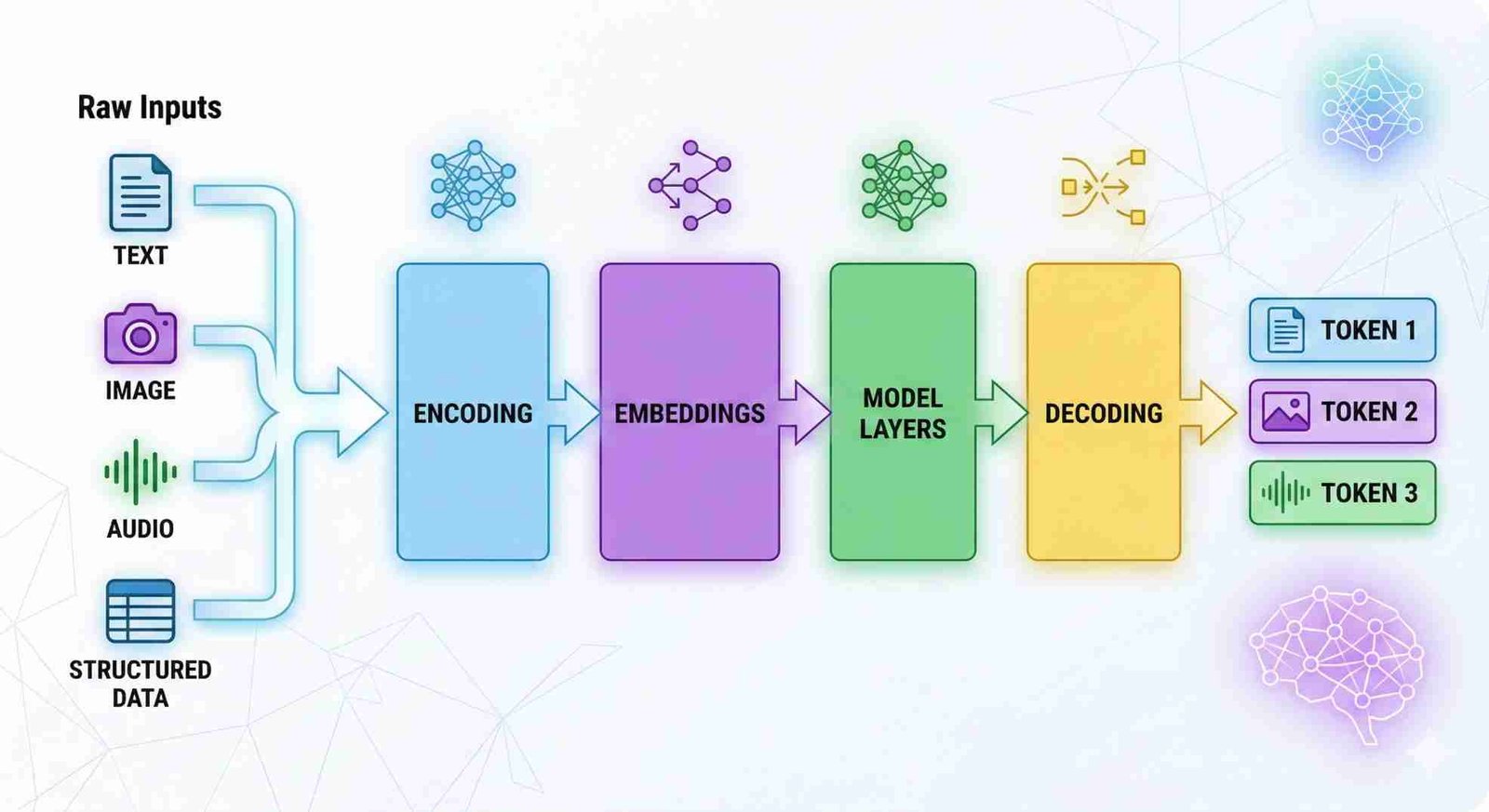
Diagram showing how AI tools transform raw input data into output tokens during inference through encoding, embeddings, model layers, and decoding stages.

Introduction How AI tools transform raw data during inference is central to understanding how output is generated. In AI systems, “raw data” refers to unprocessed input presented in human-interpretable form, such as text strings, images composed of pixel values, audio waveforms, or structured numerical records. Although these inputs appear meaningful … Read more

Inference in AI Tools: Meaning and Output Generation Process

Abstract visualization of data flowing through layered neural network representing inference in AI tools.

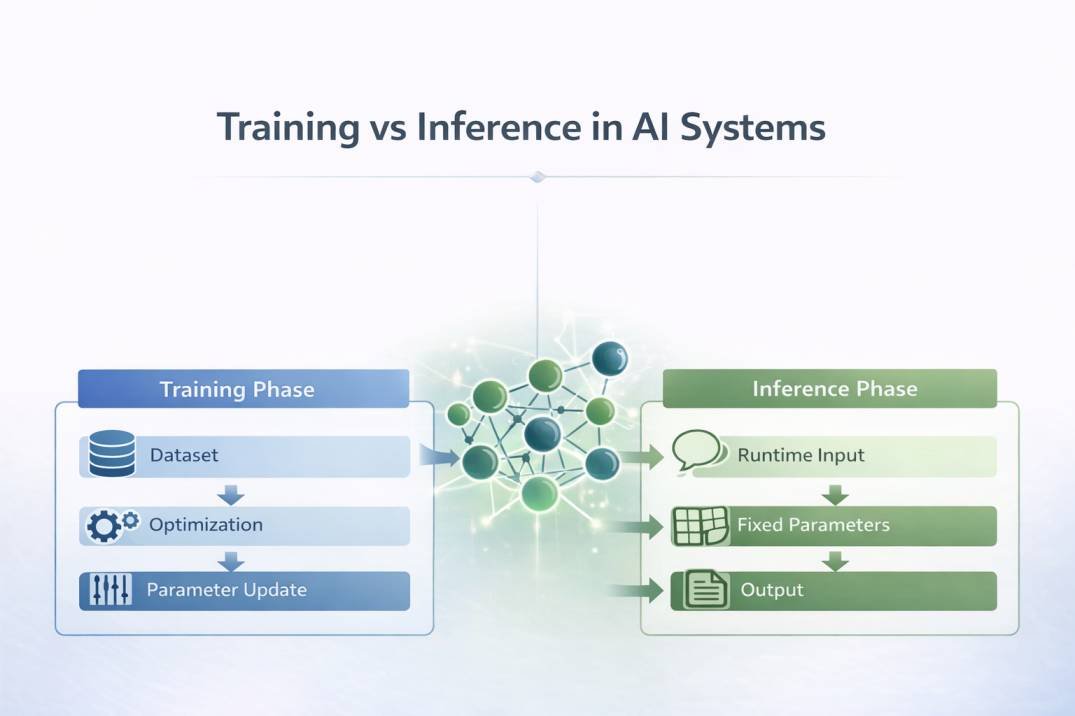
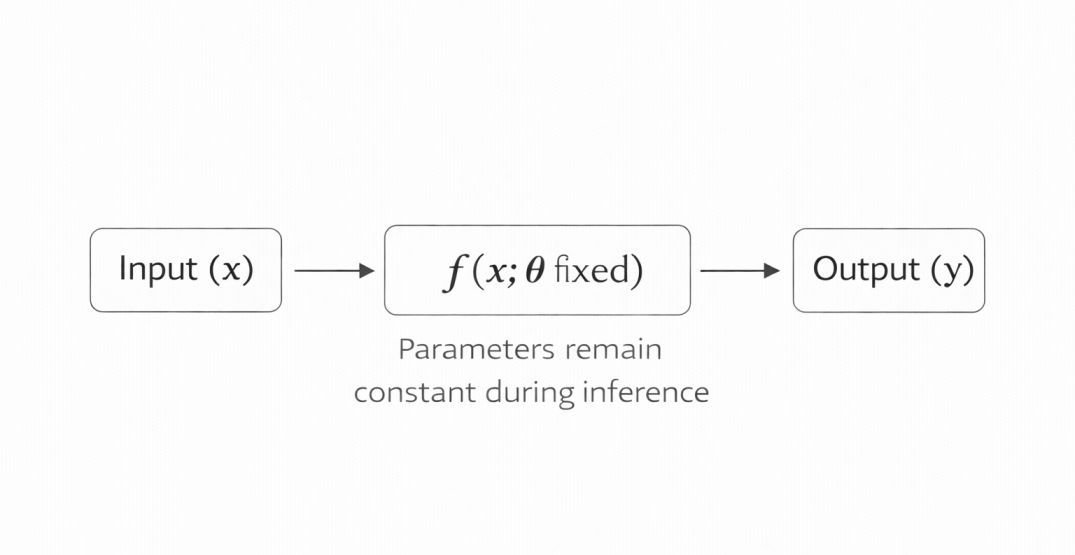
Introduction Inference in AI tools refers to the computational process through which a trained model evaluates new input data and generates outputs based on previously learned statistical patterns. Unlike rule-based software systems that execute predefined instructions, AI systems apply encoded parameters to incoming data in order to produce probabilistic results. … Read more

AI Tool Architecture Explained: Layers and Functional Dependencies

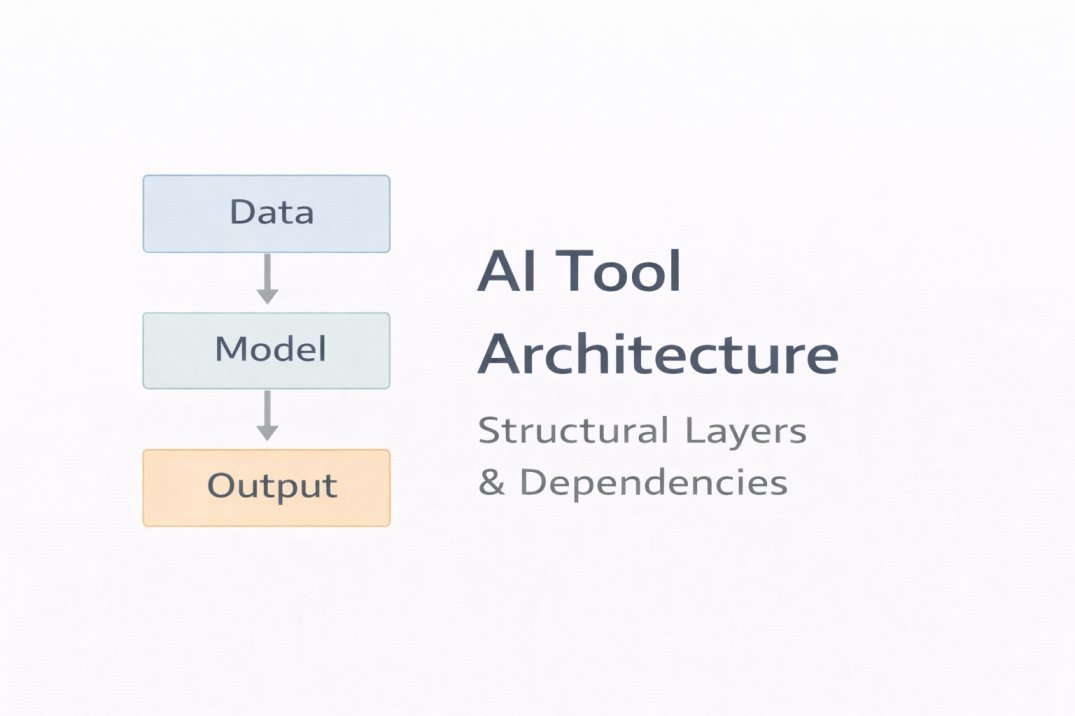
Simplified diagram showing data, model, and output layers representing AI tool architecture structural dependencies

Introduction AI tool architecture refers to the structured arrangement of technical components that collectively enable artificial intelligence systems to process data, perform computational inference, and generate outputs within defined operational boundaries. Rather than functioning as monolithic systems, AI tools are typically organized into layered modules that separate data handling, model … Read more

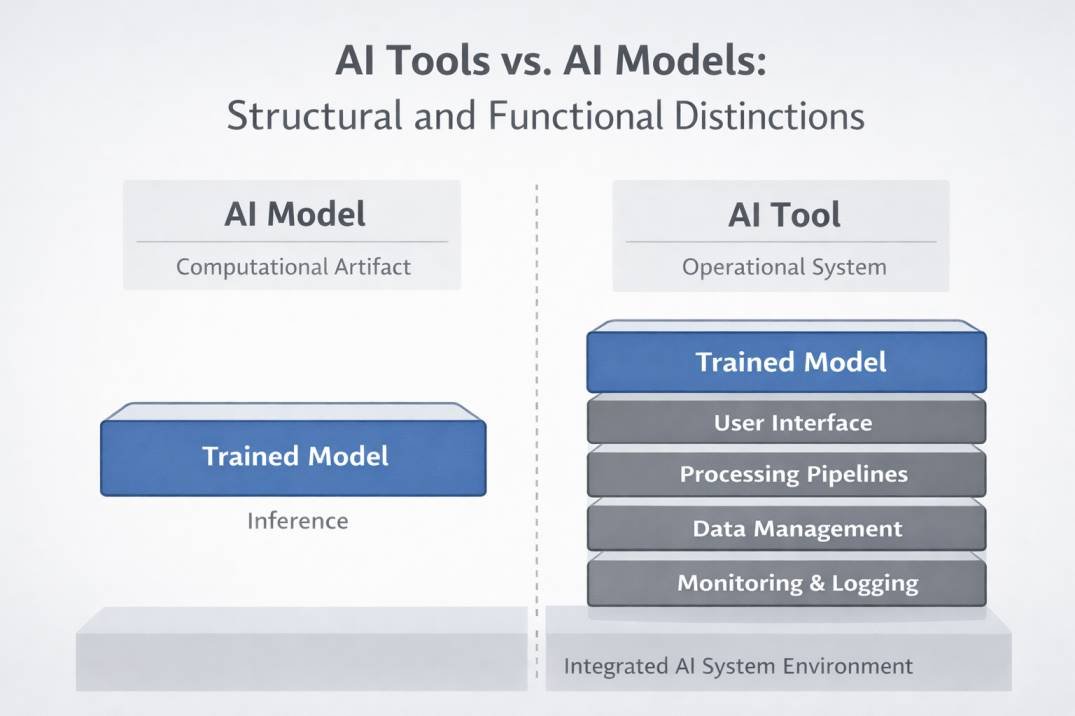
AI Tools vs AI Models: Structural and Functional Distinctions

Side-by-side structural diagram comparing an AI model as a computational inference artifact and an AI tool as a multi-layer operational system embedding the model within infrastructure components.

Introduction AI tools and AI models are frequently discussed together in artificial intelligence discourse. Although closely related, they function at separate architectural layers. Clear interpretation requires distinguishing the analytical component from the deployment environment, particularly when examining accountability allocation, lifecycle oversight, and risk boundaries. An AI model is a trained … Read more

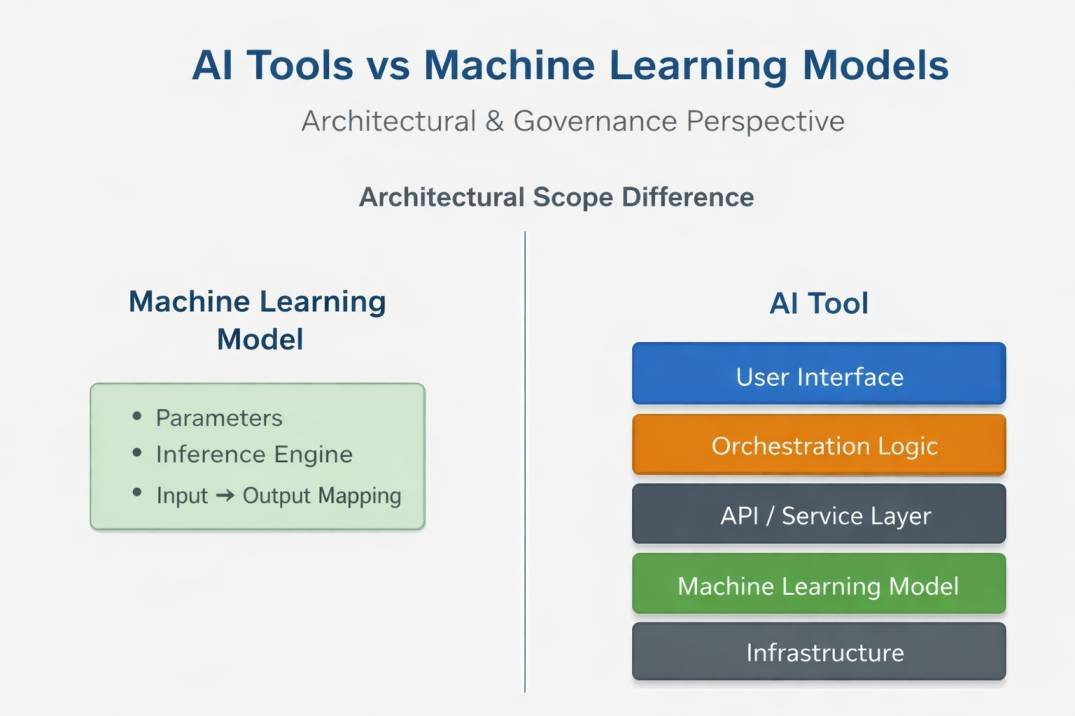
AI Tools vs Machine Learning Models: Structural and System-Level Distinctions

Diagram comparing AI tools and machine learning models, showing a standalone model with parameters and inference engine alongside a layered AI tool architecture including interface, orchestration, API, model, and infrastructure layers.

Within contemporary AI system architecture, the terms “AI tools” and “machine learning models” refer to structurally distinct layers. Introduction Artificial intelligence discourse frequently compresses multiple architectural layers into simplified terminology. References to “AI tools” and “machine learning models” are often treated as equivalent descriptors, despite representing different structural positions within … Read more

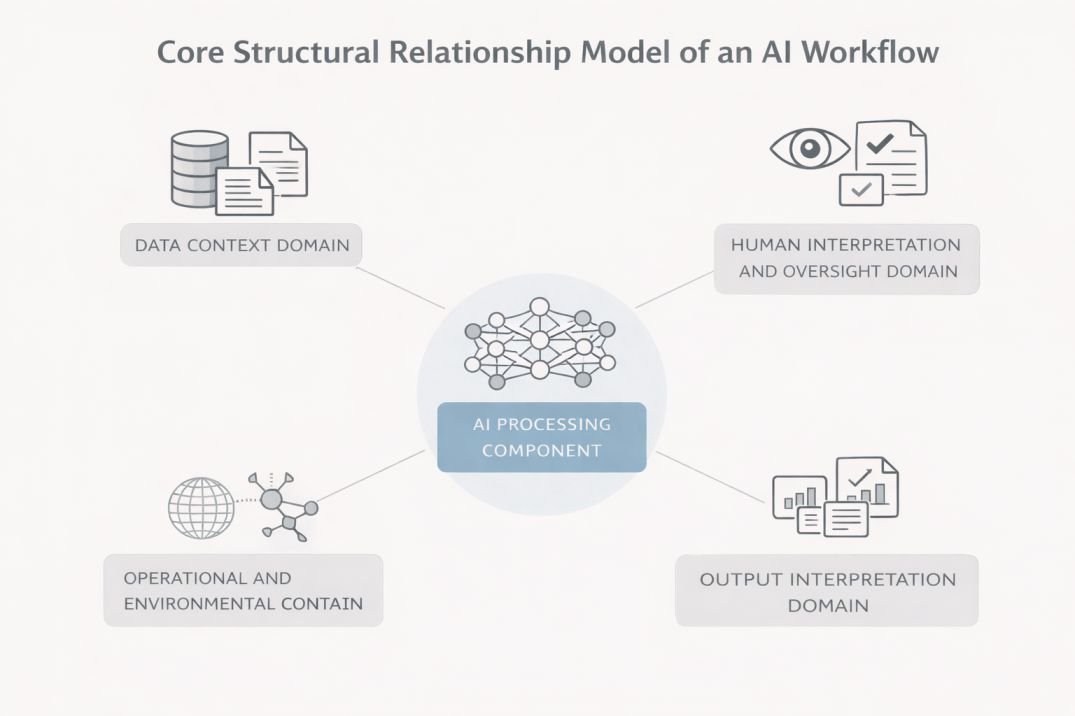
AI Tools vs Automation Tools: Structural and Functional Distinctions

Hub-and-spoke schematic diagram showing the AI Processing Component at the center connected to data context, human interpretation and oversight, output interpretation, and operational and environmental context domains.

Introduction AI tools and automation tools are often discussed together because both are deployed within structured digital workflows. However, they represent different system categories and are based on different processing logics. In systems engineering and governance-oriented literature, a clear distinction is commonly made between inference-driven components and rule-based execution mechanisms … Read more