Prompt Design Patterns: 10 Reusable Structures That Improve AI Reliability

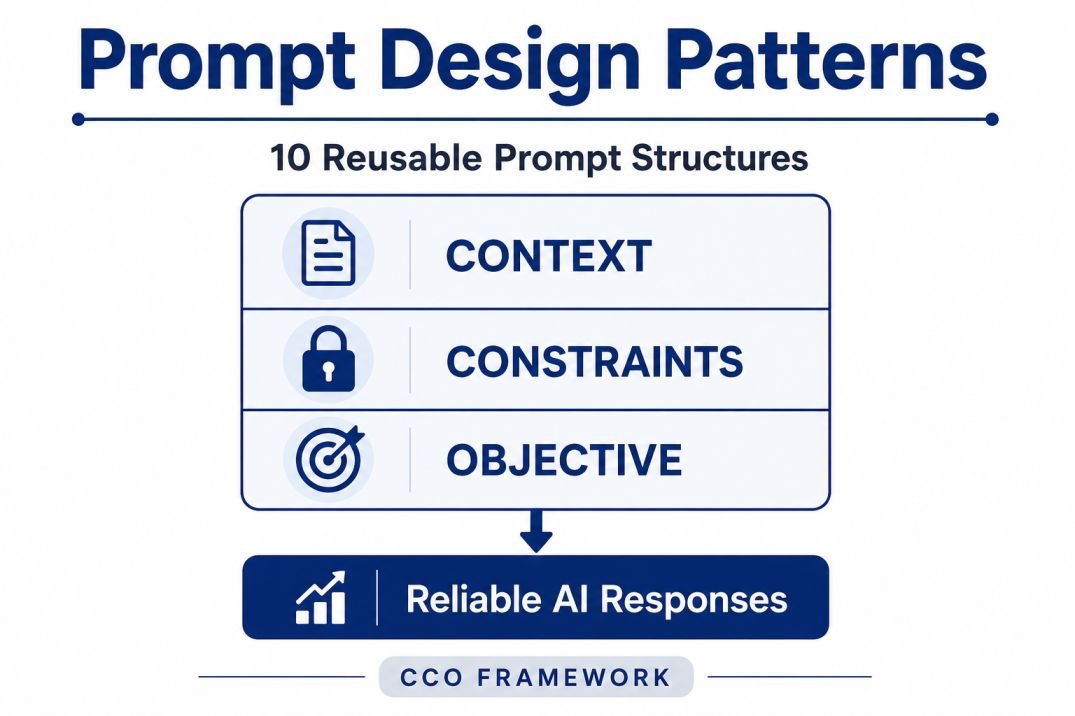
Diagram showing prompt design patterns using the Context, Constraints, and Objective framework to improve AI reliability.

Quick Answer Prompt design patterns organize instructions so AI systems can interpret requests more consistently. They improve instruction following by reducing ambiguity and clarifying objectives, but they cannot compensate for missing knowledge or replace independent human verification. Methodology Note The observations presented throughout this guide are derived from repeated practical … Read more

What Is AI Slop? Why AI Writing Sounds Artificial (and How to Fix It)

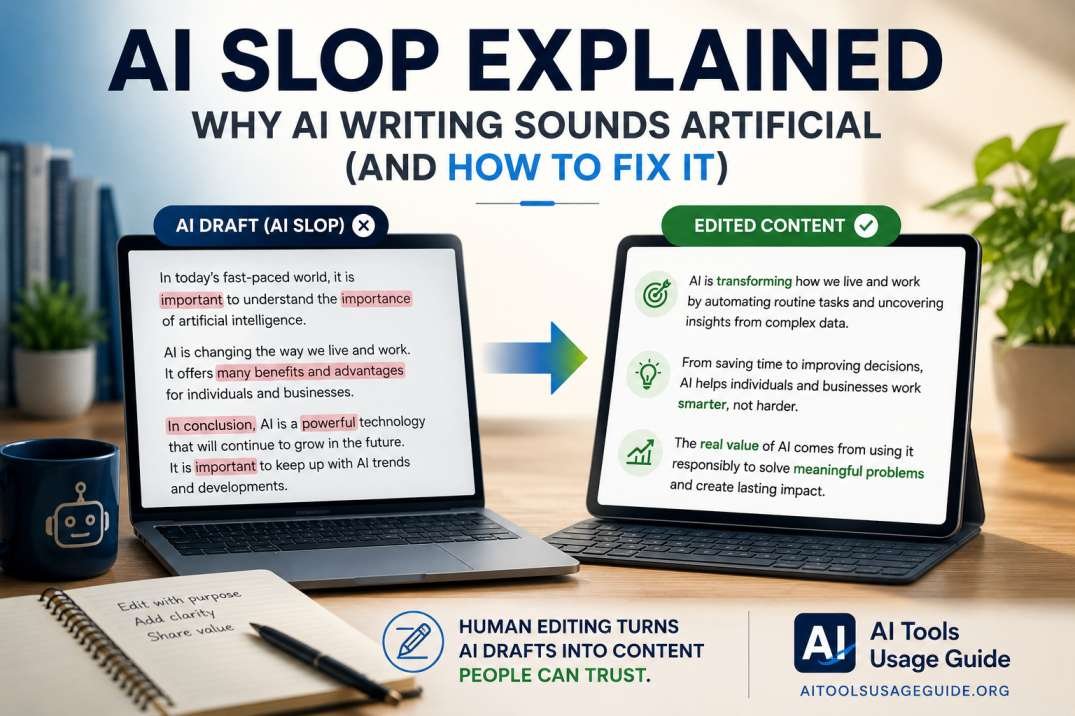
Comparison of an AI-generated draft and professionally edited content showing how human editing improves clarity, originality, and reader value.

Quick Answer AI slop refers to AI-generated content that feels repetitive, generic, or mechanically written. It is not caused by a single phrase or writing pattern. Instead, it results from multiple stylistic characteristics appearing together, such as repetitive sentence rhythm, vague wording, predictable transitions, unnecessary filler, and a lack of … Read more

Why AI Sounds Confident Even When It Is Wrong (The Confidence–Accuracy Mismatch)

Why AI sounds certain even when guessing confidence versus accuracy mismatch

Quick Answer AI sounds confident when guessing because large language models predict likely words rather than verify facts. The model’s language fluency often remains high even when factual certainty is low, creating a confidence–accuracy mismatch where incorrect information can sound authoritative and convincing. In practical terms, AI can appear most … Read more

Why AI Gives Generic Answers: Causes, Examples and Fixes

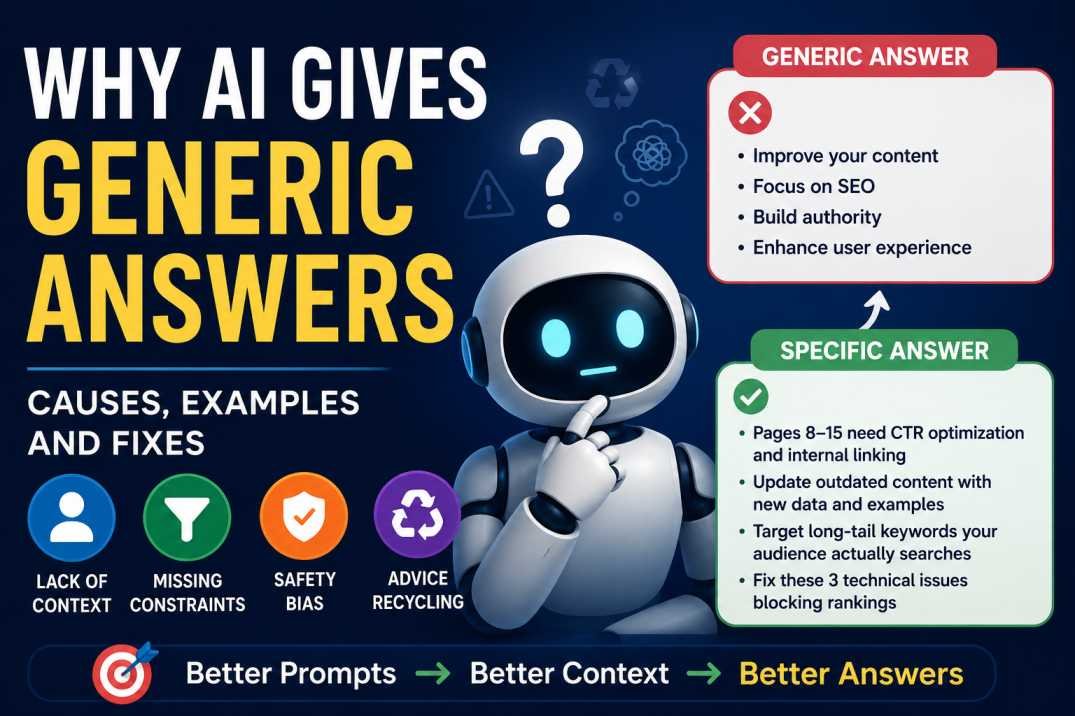
Why AI gives generic answers and how context, constraints, and better prompts improve AI responses

Quick Answer AI gives generic answers when prompts lack context, constraints, specificity, or a clear objective. In these situations, the model tends to generate statistically common responses that apply to many scenarios rather than producing recommendations tailored to a particular problem. Generic responses are not necessarily wrong. In fact, many … Read more

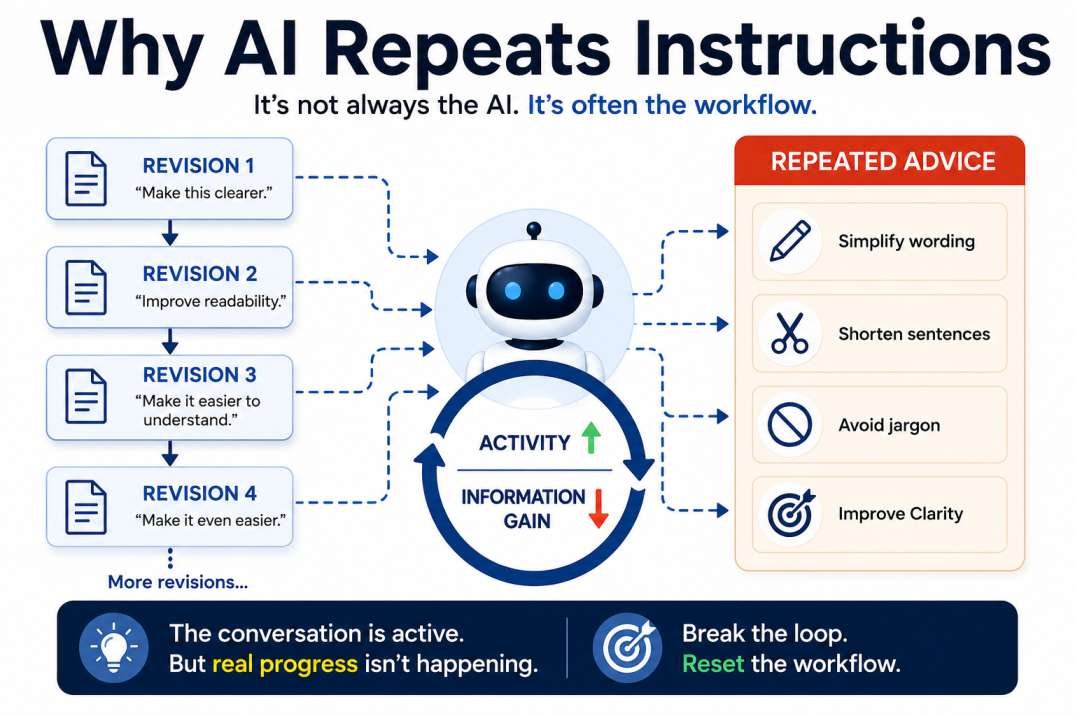
Why AI Repeats Itself: The Problem of Advice Recycling

Diagram showing how repeated AI revisions can lead to recycled advice and lower information gain despite continued activity.

AI repetition is often treated as a model limitation. In many cases, it is actually a workflow signal. When revision requests become increasingly similar, AI systems often begin recycling earlier recommendations instead of generating genuinely new improvements. Quick Answer AI does not always repeat instructions because it is confused. In … Read more

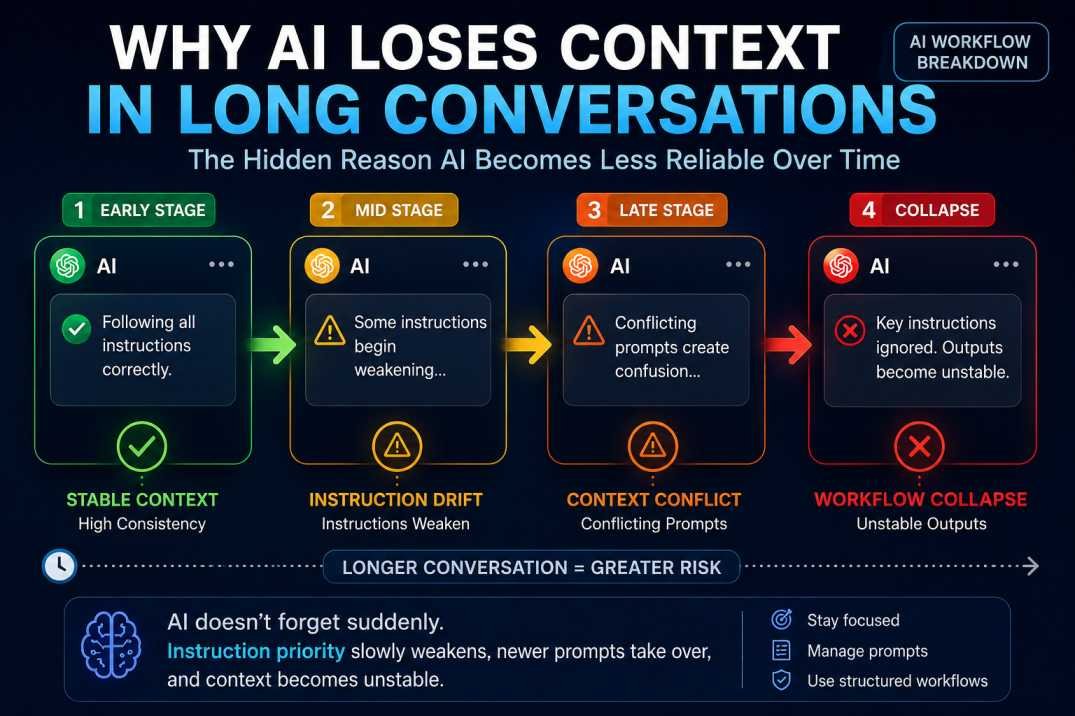
Why AI Loses Context in Long Conversations

AI context degradation stages during long conversations

Quick Answer: AI systems often become less reliable during long conversations because repeated prompts, rewrites, and competing instructions gradually weaken workflow consistency over time. Most users assume AI completely “forgets” earlier messages. In reality, the problem is usually more subtle: This degradation is usually gradual rather than complete. AI may … Read more

What is Prompt Dilution? Why ChatGPT Ignores Your Instructions

what-is-prompt-dilution-featured-image

Quick Answer: Prompt dilution happens when an AI prompt contains too much filler, excessive background information, or multiple competing instructions. As a result, the model may lose focus on the main task and generate broad, generic, or incomplete responses instead of prioritizing the most important instruction. Introduction You write a … Read more