Why AI Loses Context in Long Conversations

AI context degradation stages during long conversations

Quick Answer: AI systems often become less reliable during long conversations because repeated prompts, rewrites, and competing instructions gradually weaken workflow consistency over time. Most users assume AI completely “forgets” earlier messages. In reality, the problem is usually more subtle: This is why many long AI conversations begin accurately but … Read more

What is Prompt Dilution? Why ChatGPT Ignores Your Instructions

what-is-prompt-dilution-featured-image

Quick Answer: Prompt dilution happens when an AI prompt contains too much filler, excessive background information, or multiple competing instructions. As a result, the model may lose focus on the main task and generate broad, generic, or incomplete responses instead of prioritizing the most important instruction. Introduction You write a … Read more

AI Prompt Engineering for Teams: How Structured Instructions Improve Reliability

Featured image for AI Prompt Engineering for Teams showing the SCOPE Framework transforming chaotic prompts into reliable and scalable AI workflows.

Quick Answer: AI Prompt Engineering for Teams is the process of creating structured prompting systems that help multiple employees generate consistent, reliable, and scalable AI outputs. Instead of relying on personal prompting habits, teams use standardized templates, workflow rules, and review systems to improve output quality and reduce structured inconsistency. … Read more

AI Workflows for Teams: Why One-Off Prompts Fail

AI workflows for teams 4-step system showing one-off prompt vs structured workflow for consistent high-quality output

Quick Answer: To implement successful AI Workflows for Teams, you must stop treating LLMs like unpredictable one-shot generators and start treating them like structured assembly lines. The most common cause of consistent, production-level results is the refusal to move from unreliable “One-Off Prompts” to predictable, repeatable AI workflows. This guide … Read more

Hallucination of Authority: When AI Sounds Right but Is Wrong (Case Study + Prevention Guide)

Infographic explaining Hallucination of Authority when AI sounds right but provides false information, with causes, risks, and prevention methods.

Quick Answer: Hallucination of Authority happens when AI generates false or fabricated information using a highly confident and professional tone. Because the output sounds credible, users may trust inaccurate content without properly verifying the facts. Disclaimer: Veritas Content Solutions is a fictional composite scenario built from common industry patterns. It … Read more

Why Multi-Step Prompts Fail (And How to Fix Them)

Infographic showing why multi-step prompts fail and how iterative layering improves AI accuracy.

Quick Answer: Prompt structure controls AI output by reducing the number of acceptable answers the model can generate. When prompts include: AI systems stop hedging and begin producing more decisive and consistent responses. Introduction: Why Your Mega-Prompts Are Failing If you’ve noticed ChatGPT “forgetting” instructions or hallucinating data in complex … Read more

How Prompt Structure Controls AI Output (The Logic Test)

AI prompt structure diagram showing how vague prompts produce multiple answers while structured prompts lead to a single clear decision

Introduction Prompt structure determines how many answers an AI model considers acceptable. When prompts are vague, multiple responses remain logically valid. The model avoids committing and produces broad, non-committal answers. Structured prompts change this behavior. By adding constraints, priorities, and output requirements, you reduce the number of acceptable outcomes the … Read more

Why AI Gives Wrong Answers: A Practical Testing Analysis

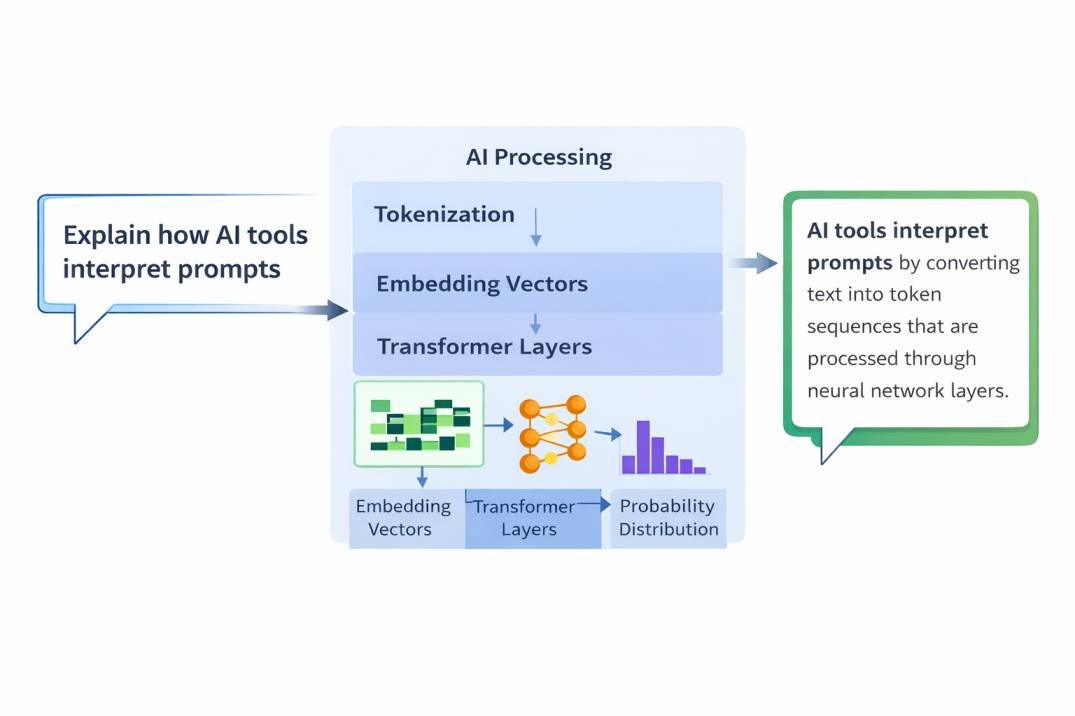
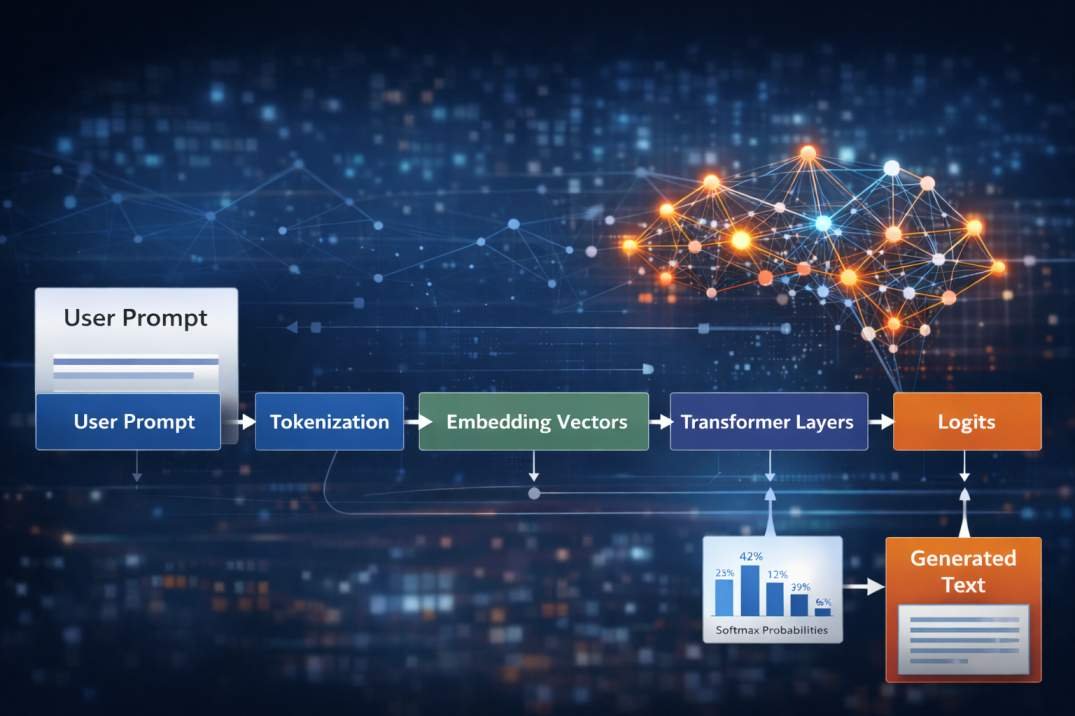
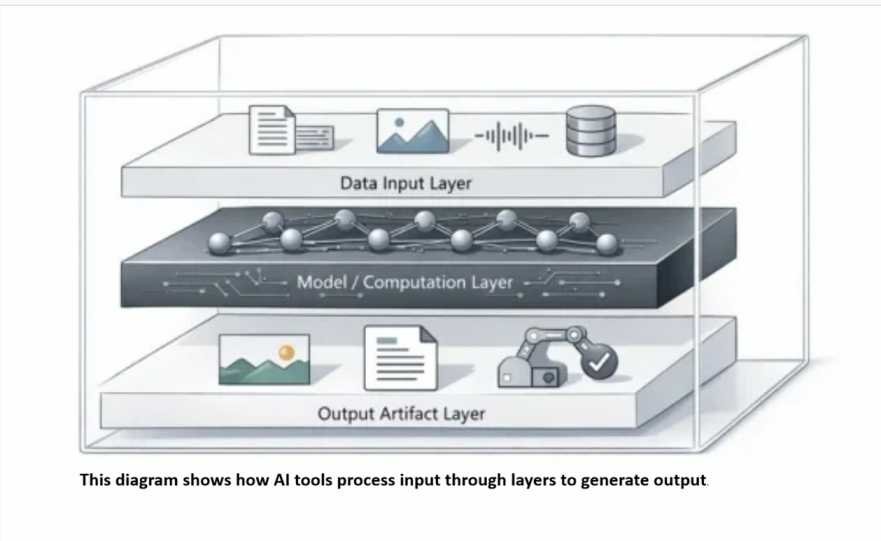
AI processing diagram showing how prompts are converted through tokenization, embedding vectors and transformer layers to produce answers

Quick Answer: AI gives wrong answers mainly for three reasons: outdated knowledge (knowledge cutoff), missing context in prompts, or hallucination where information is invented. In prompt testing across multiple AI models, missing context and outdated information appeared more often than true hallucination. Identifying the failure type is usually the fastest … Read more

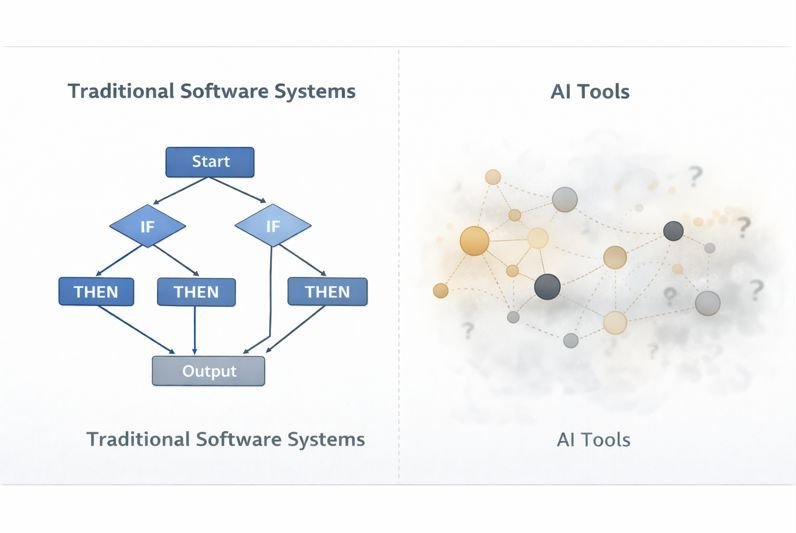
Why AI Tools Behave Unpredictably Compared to Traditional Software

Split conceptual diagram showing deterministic rule-based logic in traditional software systems contrasted with probabilistic, data-driven inference in AI tools.

Traditional software produces the same output when given the same input repeatedly. AI systems often do not. During workflow testing, the same summarization prompt produced different formatting, structure, and detail retention across multiple AI tools, even when the instructions remained unchanged. This unpredictability highlights the most important operational difference when … Read more